
Portus and Ostia
For most of Rome's imperial period, the capital depended on two harbour sites at the mouth of the Tiber. Ostia had served merchant traffic since the Republican period, while Portus was established by Claudius in the first century AD and greatly enlarged under Trajan. Together they formed the commercial gateway through which grain, oil, wine and manufactured goods reached the city. The Portus Project homepage introduces the long-term research programme that has studied both harbours and their relationship to Rome.
Ostia before Portus
Ostia lies roughly 25 km south-west of Rome at the point where the Tiber meets the Tyrrhenian Sea. From the third century BC it functioned as Rome's principal port, with warehouses, temples and residential quarters lining the riverfront. By the early imperial period, however, Ostia faced practical limits. Anchorage in the river mouth was restricted, seasonal flooding affected the lower Tiber, and larger merchant ships needed safer and deeper water than Ostia could reliably offer. These pressures help explain why the emperors looked to a new harbour complex slightly to the north-west, on coastal land that would become Portus.
Why Claudius built Portus
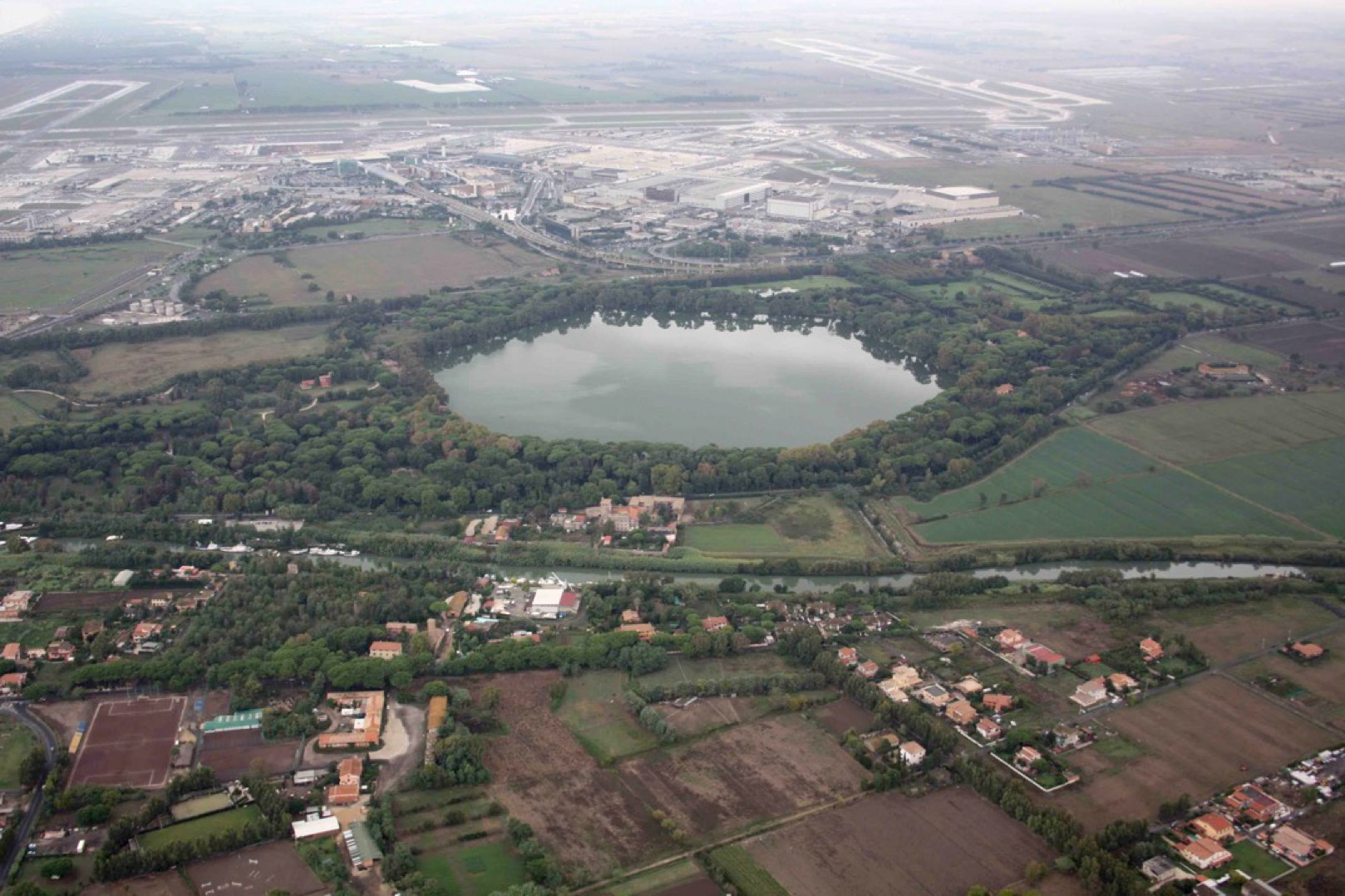
Claudius established Portus in the mid first century AD with two harbour basins cut into the coastline and connected to the Tiber. The aim was to relieve congestion at Ostia and reduce the risks of navigating the river's lower reaches with heavily laden cargo ships. The new port could receive vessels offshore and transfer goods inland by canal and road. For the chronological context of this foundation, see the Claudian period pages. Excavation and survey at Portus have revealed the scale of Claudian harbour works, including quays, breakwaters and the earliest administrative buildings on the central isthmus.
A two-port system under Trajan
Trajan's expansion in the early second century AD transformed Portus into one of the largest harbour complexes in the Roman world. A hexagonal basin, the Fossa Traiana canal and extensive warehouses allowed goods to move between sea, canal and river with far greater efficiency. Ostia did not disappear. It remained a thriving town with its own harbours, commercial districts and connections to Portus via road and water. The two sites operated as complementary parts of a single supply system for Rome. The location pages describe the geography of the harbour zone, and the Trajanic period pages cover the major engineering works of this phase.
What the Portus Project adds
Research by the Portus Project and related programmes has traced how the two harbours developed, declined and changed function from the first through the sixth centuries AD. Geophysical survey, open-area excavation and finds analysis have clarified the roles of key buildings such as the Palazzo Imperiale and the Grandi Magazzini di Settimio Severo in managing traffic between the Claudian and Trajanic basins. Study of ceramics, environmental samples and structural remains has also shed light on the volume and range of cargoes passing through the port complex. For a wider introduction to the project and its publications, return to the Portus Project homepage.